
Czech cuisine, often overshadowed by the culinary traditions of its more globally renowned neighbors like France and Italy, is a hearty and rich blend of history, geography, and cultural influences. Rooted in centuries of farming, folk traditions, and the influences of neighboring countries such as Germany, Austria, and Hungary, Czech food is known for its robust flavors, satisfying portions, and the use of simple yet high-quality ingredients. Whether you’re exploring the cobbled streets of Prague or the rolling hills of Moravia, Czech cuisine offers a delightful journey through the heart of Central Europe.
Foundations of Czech Cuisine
At its core, Czech cuisine is centered around what can be grown in the country’s fertile land. The mainstays of the Czech diet are meats (especially pork, beef, and chicken), potatoes, cabbage, and hearty root vegetables like carrots and onions. Bread, especially rye bread, plays a significant role in Czech meals, often served alongside a variety of soups and stews. Dairy products such as cheese, cream, and butter are also commonly used in cooking.
In addition to these staples, the Czech diet is complemented by a wide range of seasonal vegetables and fruit, which vary according to the time of year, including apples, pears, and berries. Czech food is also characterized by its simplicity, with meals often comprising just a few ingredients, but each element is prepared and combined in a way that lets the flavors shine.
Classic Czech Dishes
1. Svíčková (Braised Beef in Cream Sauce)
Svíčková is arguably the most iconic Czech dish, a celebration of beef in a rich, creamy sauce. This dish features beef sirloin slow-cooked with onions, carrots, and spices, then simmered in a creamy sauce made from heavy cream, root vegetables, and vinegar. It’s typically served with knedlíky (Czech dumplings), which are perfect for soaking up the flavorful sauce. Svíčková is often accompanied by cranberry sauce and a slice of lemon to balance out the richness.
Where to try it: Almost every Czech restaurant will serve a version of this classic, but it’s particularly famous in Prague’s traditional eateries.
2. Vepřo knedlo zelo (Pork, Sauerkraut, and Dumplings)
A true Czech comfort food, vepřo knedlo zelo consists of tender roasted pork, sauerkraut, and fluffy bread dumplings. The pork is often marinated and slowly roasted until crispy on the outside and juicy on the inside, while the sauerkraut adds a tangy and sour contrast to the richness of the meat. The bread dumplings (knedlíky) are a must-have accompaniment, as they help soak up the sauce from the pork and sauerkraut.
Where to try it: This hearty dish is often found in Czech pubs and is a favorite for a family meal.
3. Czech Goulash (Guláš)
Goulash, though originally Hungarian in origin, has become a beloved part of Czech cuisine, with its own distinctive twist. The Czech version of Guláš (Goulash), typically features tender chunks of beef or pork stewed in a thick, rich gravy made from cream, carrots, onions, paprika, and caraway seeds. It’s hearty and often served with dumplings or bread for soaking up the flavorful sauce. Unlike the spicier Hungarian version, Czech goulash tends to be milder, but equally satisfying.
Where to try it: Czech goulash is a common sight in pubs and restaurants across the country, often accompanied by knedlíky (bread dumplings) or crusty bread. It pairs wonderfully with a glass of Czech beer.
4. Koleno (Pork Knee)
For meat lovers, koleno is a must-try dish. The pork knee is slow-roasted until the meat is falling off the bone and coated in a crispy, golden skin. It’s typically served with mustard, horseradish, pickles, and bread. The combination of the rich, tender pork and the sharp condiments makes for an unforgettable meal.
Where to try it: Traditional Czech beer halls and restaurants that specialize in grilled meats serve this dish. Pair it with a glass of Pilsner for the full experience.
5. Palačinky (Czech Pancakes)
If you have a sweet tooth, palačinky are the Czech answer to crêpes. These thin pancakes are filled with a variety of ingredients, from jam and chocolate to fresh fruit and whipped cream. They can be served as a dessert or even as a main course for breakfast, depending on the filling.
Where to try it: Available in most cafes and restaurants, especially as a popular street food in Prague.
6. Smažený Sýr (Fried Cheese)
This beloved Czech food is a simple yet indulgent treat: a breaded and deep-fried thick slice of cheese, often served with tartar sauce and a side of fries. It’s similar to a cheese fritter but with a uniquely Czech twist, often made with types of cheese like Edam or Hermelín, which are similar to Brie.
Where to try it: You can find smažený sýr at almost any Czech pub or street food stand.
7. Pork Neck (Vepřová Krkovice)
Vepřová krkovice (pork neck) is a popular cut of meat in Czech cooking, known for its marbling, tenderness, and flavorful juiciness. It’s often grilled or roasted, typically seasoned with garlic, herbs, and spices, and sometimes marinated in beer or vinegar to enhance its taste. The pork neck can be served with a variety of sides, such as sauerkraut, roasted green beans, potatoes, or knedlíky (dumplings). This dish is often found in Czech beer halls, where the juicy meat is paired with a cold pint of Czech lager.
Where to try it: You’ll find vepřová krkovice in many Czech restaurants and pubs, particularly those offering traditional grilled meats.
Czech Drinks: Beer, Wine, and Spirits
Czech Republic is often considered the birthplace of beer, and the country’s brewing tradition dates back more than a thousand years. Czech people are known to be some of the highest consumers of beer per capita in the world, and the range of locally brewed beers is astounding.
Pilsner Lager
The world-famous Pilsner lager originated in Pilsen (Plzeň), and it’s the type of beer most associated with the Czech Republic. With its crisp, hoppy flavor and refreshing bitterness, it’s the perfect pairing with hearty Czech dishes.
Where to try it: Pilsner Urquell, brewed in Plzeň, is the most iconic of Czech lagers, but there are countless regional breweries offering their take on this refreshing style.
Czech Budvar (Budweiser Budvar)
Czech Budvar, also known internationally as Budweiser Budvar, is a national treasure and one of the Czech Republic’s most respected beers. Brewed in the city of České Budějovice (known as Budweis in German), this lager is known for its full-bodied flavor, balanced bitterness, and unique brewing process. Unlike many other beers with the “Budweiser” name, Czech Budvar is brewed with Saaz hops, Moravian malt, and soft water from artesian wells, giving it a distinctive taste. It’s brewed using traditional methods, including a longer fermentation process that enhances its smooth, mellow flavor.
Where to try it: Budvar is widely available throughout the Czech Republic, particularly in restaurants, beer halls, and pubs. For the authentic experience, try it at the brewery’s visitor center in České Budějovice.
Moravian Wine
The wine regions in the Czech Republic, particularly in the south around the town of Mikulov in Moravia, produce some excellent white wines. Moravian wine is often less well-known internationally, but it’s an essential part of Czech culture. Varieties like Müller-Thurgau, Riesling, and Veltlínské Zelené (Green Veltliner) are often enjoyed with lighter Czech fare, especially in the summer months.
Slivovice (Plum Brandy)
For something stronger, slivovice is a traditional Czech spirit made from plums. It’s an intense and flavorful brandy often served as an aperitif or after a hearty meal. Many families produce their own homemade versions, and it is frequently offered as a sign of hospitality in Czech homes.
Czech Sweets and Desserts
1. Trdelník (Chimney Cake)
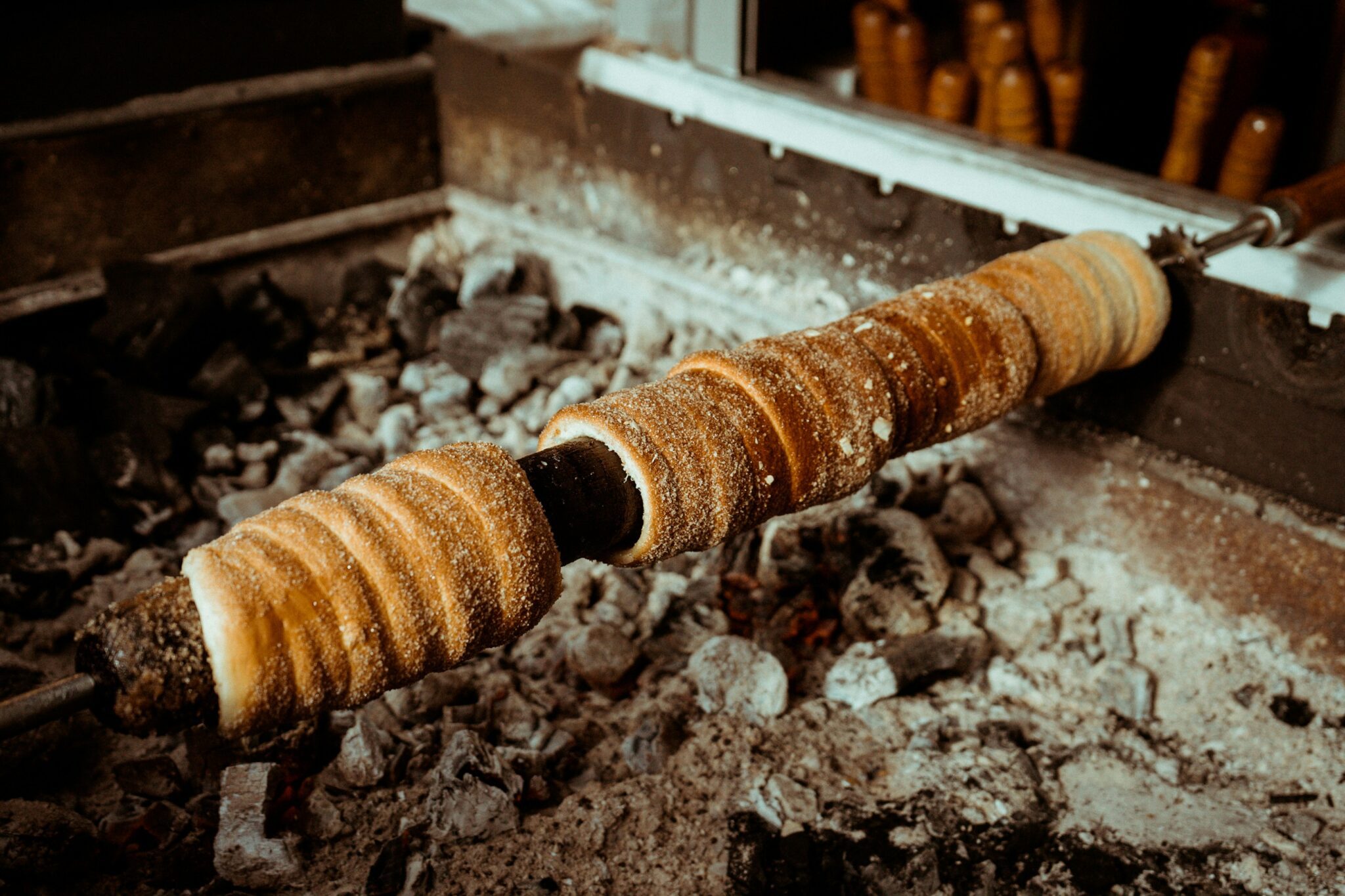
Though often seen as a tourist trap in Prague, trdelník is a popular Czech pastry that has roots in the country’s baking traditions. The dough is rolled, wrapped around a stick, and then grilled over an open flame, creating a crispy, caramelized crust. It’s typically sprinkled with sugar, nuts, and cinnamon, and sometimes filled with ice cream or other toppings.
Where to try it: Found in many tourist areas and local bakeries, especially in Prague’s Old Town Square.
2. Koláče (Sweet Pastries)
Koláče are small, round pastries topped with a variety of fillings, such as fruit jams, poppy seeds, or sweet cheese. Traditionally, these pastries are made for holidays and celebrations, but they are widely available in Czech bakeries.
Where to try it: Many local bakeries will have freshly baked koláče available.
3. Trhanec (Czech Scrambled Pancake Dessert)
Trhanec is a type of scrambled pancake, made by cooking pancake batter in a pan and then tearing it into pieces while it’s still soft. The resulting pieces are then dusted with powdered sugar, and often served with fruit preserves or fresh fruit. This dessert is simple yet incredibly satisfying.
Where to try it: This traditional dessert is often made in homes for Sunday lunches or as an easy-to-make dessert for family gatherings.
4. Bublanina (Fruit Cake)
A classic Czech fruit cake, bublanina is a light, fluffy sponge cake typically filled with seasonal fruits such as cherries, strawberries, or apricots. The fruit is often mixed into the batter or sprinkled on top before baking. It’s a popular treat for picnics, or gatherings.
Where to try it: You can find bublanina in bakeries and cafes, especially in the summer when fresh fruit is in season.
5. Vánočka (Czech Christmas Bread)
Vánočka is a traditional Czech braided sweet bread, typically made with eggs, butter, and milk. It’s flavored with vanilla, and often contains raisins or almonds, and sometimes a hint of citrus zest. Vánočka is typically enjoyed at Christmas time, served with butter or jam and is a true symbol of the holiday season.
Where to try it: Vánočka can be found in bakeries during the Christmas season or prepared at home as part of holiday celebrations.
6. Koláče s Povidly (Poppy Seed Koláče)
These variations of the koláče are filled with a sweet poppy seed paste, often enriched with sugar, honey, or vanilla. Poppy seeds are a beloved ingredient in Czech baking, adding both flavor and texture to many desserts.
Where to try it: Koláče s povidly are often served at family gatherings, especially during holidays like Easter.
7. Štrúdl (Strudel)
The Czech version of apple strudel, štrúdl is a delicious pastry filled with apples, sugar, cinnamon, and raisins. It’s typically made with a thin, flaky dough that is rolled around the filling and then baked until golden and crispy. It’s often served warm, with a dusting of powdered sugar.
Where to try it: Available at most Czech cafes, especially in places that serve traditional desserts.
8. Dukátové Buchtičky
Dukátové buchtičky are soft, sweet, steamed buns, traditionally served with a rich vanilla custard sauce. These little buns are made from a sweet yeast dough, often lightly spiced with vanilla and lemon zest. They are perfect for dipping into the custard sauce, which gives them a delicious creamy finish. These pastries are especially popular for an afternoon dessert.
Where to try it: Dukátové buchtičky are found in many Czech homes and local bakeries, often served in cafes and restaurants.
Czech desserts are a beautiful reflection of the country’s culinary traditions, blending simplicity with indulgence. Whether you’re enjoying a koláč at a local bakery or savoring a plate of trhanec, Czech sweets are sure to satisfy any sweet tooth and make for a delightful end to any meal.
A Culinary Tradition of Warmth and Comfort
Czech cuisine is not just about food – it’s about experience. Meals are often long and leisurely, enjoyed in the company of friends and family. The culture of sharing food, the use of locally sourced ingredients, and the focus on hearty, satisfying dishes make Czech cuisine the ultimate reflection of the Czech spirit: hearty, humble, and filled with love.
So whether you’re wandering the charming streets of Prague or relaxing in a village pub in Moravia, be sure to take a culinary journey.